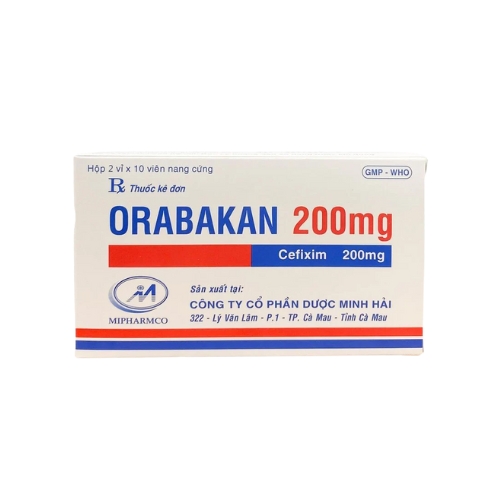
ORABAKAN 200mg
Orabakan 200mg is an antibiotic containing the active ingredient cefixime. To better understand the uses of the medicine as well as the possible adverse effects during the use of Orabakan 200mg, you can refer to the information below.
1. What is Orabakan 200mg?
Orabakan 200mg is an antibiotic. Its main ingredient is Cefixime: 200mg, along with other suitable excipients. Orabakan 200mg is formulated as a hard capsule.
Pharmacodynamics of Orabakan 200mg:
- Orabakan 200mg contains cefixime, a third-generation cephalosporin antibiotic.
Pharmacokinetics of Orabakan:
- Absorption: The drug is well absorbed both orally and parenterally. After oral administration, about 40–50% is absorbed through the gastrointestinal tract; absorption increases when taken with food.
- Metabolism: Orabakan 200mg is metabolized in the liver.
- Elimination: The drug is mainly excreted via the kidneys.
Effects of Orabakan 200mg:
- Effective against gram-negative bacteria, stable to beta-lactamase, and achieves bactericidal concentrations in cerebrospinal fluid.
- Orabakan also acts against P. aeruginosa.
2. Indications of Orabakan 200mg
Orabakan 200mg is indicated in the following cases:
-
Uncomplicated urinary tract infections caused by susceptible bacteria and uncomplicated gonorrhea.
-
Pyelonephritis and complicated urinary tract infections caused by organisms such as Enterobacteriaceae, although treatment effectiveness may be lower compared to uncomplicated UTIs.
-
Otitis media, rhinitis, and tonsillitis.
-
Pneumonia, acute bronchitis, and chronic bronchitis.
-
Mild to moderate community-acquired pneumonia.
-
Typhoid fever and dysentery.
3. Dosage - How to use Orabakan 200mg
How to use: Orabakan 200mg should be taken orally after meals with a full glass of water.
Dosage:
- Adults and children over 12 years: 400mg/day, divided into 2 doses (morning and evening) after meals.
- Uncomplicated gonorrhea: a single dose of 400mg or 200mg twice daily.
- Children 6 months to 12 years: 8mg/kg/day (single dose) or 4mg/kg twice daily.
- Renal impairment: dosage adjustment is required depending on kidney function.
- Recommended treatment duration is 5–10 days.
Note: The dosage above is for reference only. The exact dose depends on the patient’s condition and response to Orabakan 200mg. Follow your doctor’s prescription precisely.
4. Overdose and Management
Overdose of Orabakan 200mg may cause seizures. There is no specific antidote; management is mainly symptomatic. If overdose occurs, discontinue the drug immediately and perform gastric lavage; use anticonvulsants if indicated. Orabakan 200mg cannot be removed by hemodialysis or peritoneal dialysis.
5. Contraindications of Orabakan 200mg
-
Patients with allergies or hypersensitivity to cephalosporin antibiotics or any component of the drug.
-
Infants under 6 months of age.
6. Drug Interactions between Orabakan and other medicine
During the use of Orabakan, interactions may occur between this medicine and others, or with food/supplements. This can affect its safety and effectiveness. Patients should inform their doctor of all prescription and non-prescription drugs being used. Notable interactions
- Orabakan + Probenecid: increases peak concentration and AUC, decreases renal clearance and distribution volume.
- Orabakan + anticoagulants (e.g., warfarin): increases prothrombin time, with or without bleeding.
- Orabakan + carbamazepine: increases carbamazepine plasma concentration.
- Orabakan + nifedipine: increases bioavailability (higher peak concentration and AUC).
7. Side effects of Orabakan 200mg
Side effects may occur during treatment. Clinical trials show common, usually mild and transient reactions such as: Digestive disorders, dizziness, headache, restlessness, insomnia, fatigue, rash, urticaria, drug fever. These usually occur within the first 1–2 days and respond to symptomatic treatment; rarely is drug discontinuation required. Less common but serious side effects include: Severe diarrhea due to Clostridium difficile → pseudomembranous colitis, Stevens-Johnson syndrome, anaphylaxis, angioedema, erythema, Hematologic disorders: thrombocytopenia, leukopenia, eosinophilia, Hepatitis, jaundice; temporary increases in AST, ALT, alkaline phosphatase, bilirubin, LDH, Acute renal failure, increased BUN and creatinine, Vaginal candidiasis. Patients should notify their doctor immediately if any abnormal symptoms occur.
8. Precautions when using Orabakan
- In renal impairment: dosage adjustment is required depending on kidney function.
- Children under 6 months: not recommended due to lack of safety data.
- Elderly: no dosage adjustment needed unless severe renal impairment is present.
- Pregnancy: only use when absolutely necessary; adequate studies are lacking.
- Breastfeeding: use with caution as it is unclear whether the drug passes into breast milk.
Orabakan 200mg is a prescription antibiotic used for bacterial infections. To ensure safe use, patients must strictly follow their doctor’s instructions.