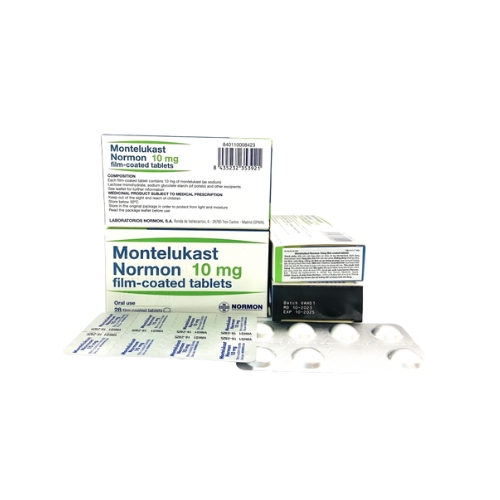
Montelukast Normon 10 mg film-coated tablets
Drug Class: Respiratory system medication
Dosage Form: Film-coated tablets
Packaging: Box of 4 blister packs x 7 tablets
Ingredients:
Montelukast (as Montelukast sodium) 10 mg
| Manufacturer: | Laboratorios Normon, S.A - SPAIN |
Indications:
Prevention and treatment of chronic asthma in adults and children aged 15 years and older, including prevention of daytime and nighttime asthma symptoms, treatment of aspirin-sensitive asthma, and prevention of exercise-induced bronchoconstriction.
Reduces daytime and nighttime symptoms of allergic rhinitis.
Dosage - Administration
The medication is taken once daily, with or without food.
For asthma, it is recommended to take the medication in the evening. For allergic rhinitis, the duration of use depends on the individual patient’s needs.
For patients with both asthma and allergic rhinitis, take one tablet daily in the evening.
- Patients aged 15 years and older with asthma and/or allergic rhinitis: one 10 mg tablet or two 5 mg tablets daily.
General Recommendations:
The therapeutic effect of Montelukast on asthma parameters is achieved within 1 day. Patients should be advised to continue taking Montelukast even if asthma symptoms are controlled, including during periods of more severe asthma.
No dose adjustment is required for patients with kidney impairment, mild to moderate liver impairment, elderly patients, or based on gender.
Treatment in Relation to Other Asthma Medications:Montelukast can be used in combination with other ongoing asthma treatments.
Combination medication doses may be reduced, including bronchodilators and inhaled or oral corticosteroids. Montelukast should not be used as a sudden replacement for inhaled or oral corticosteroids.
Contraindications:
Hypersensitivity to any component of the medicationDrug Interactions:
Use with caution, especially in children, when combined with CYP3A4-inducing agents (such as phenytoin, phenobarbital, rifampicin)Side effects:
Upper respiratory tract infectionsIncreased bleeding
Hypersensitivity reactions, including anaphylaxis and eosinophilic infiltration in the liver
Dizziness, drowsiness, paresthesia/reduced sensation, seizures
Palpitations
Nosebleeds
Diarrhea, dry mouth, indigestion, nausea, vomiting
Increased serum ALT and AST, hepatitis (including cholestatic hepatitis, hepatocellular inflammation, mixed liver injury)
Angioedema, bruising, hives, itching, rash, erythema nodosum
Joint pain, muscle pain including cramps
Weakness/fatigue, malaise, edema, fever
Precautions:
Do not use simultaneously with other products containing similar ingredients to montelukast.Not for the treatment of acute asthma attacks.
Do not abruptly replace oral or inhaled corticosteroids with Montelukast.
Closely monitor clinical status when reducing systemic corticosteroid doses in patients using Montelukast.
Patients with galactose intolerance, Lapp lactase deficiency, or glucose-galactose malabsorption should not use this medication.
Pregnant and breastfeeding women.
When driving or operating machinery.
Montelukast Ingredient Information
Regular use of the medication helps prevent wheezing, shortness of breath caused by asthma, and reduces the frequency of asthma attacks.
Reduces symptoms of seasonal allergies and allergic rhinitis: sneezing, nasal congestion, runny nose, itchy nose.
Can be used before exercise to prevent exercise-induced bronchoconstriction and may reduce the need for inhaled medication.
Reduces symptoms and acute asthma attacks.
Used to treat year-round allergy symptoms in adults and children at least 6 months old.
Treats seasonal allergy symptoms in adults and children at least 2 years old.
Montelukast is used to prevent symptoms such as wheezing, shortness of breath, chest tightness, and coughing caused by asthma.
Montelukast is also used to prevent bronchoconstriction (shortness of breath) during exercise and to treat symptoms of acute or chronic allergic rhinitis (symptoms such as sneezing, nasal congestion, runny nose, or itchy nose). Montelukast is a leukotriene receptor antagonist (LTRA).
- Usual adult dose for allergic rhinitis:
Take 10 mg once daily. Asthma patients should take it in the evening. For allergic rhinitis, the timing can be adjusted according to the patient’s needs. Patients with both asthma and allergic rhinitis should take one dose daily in the evening.
- Usual adult dose for asthma maintenance:
Take 10 mg once daily. For asthma, take in the evening. For allergic rhinitis, timing can be adjusted to patient needs. Patients with both asthma and allergic rhinitis should take one dose daily in the evening.
- Usual adult dose to prevent exercise-induced bronchoconstriction:
Take 10 mg at least 2 hours before exercise. Additional doses should not be taken within 24 hours of the previous dose. Patients taking Montelukast daily (including chronic asthma) should not take an extra dose to prevent exercise-induced bronchoconstriction. All patients should have a fast-acting short-acting beta-2 agonist available. Daily Montelukast for chronic asthma has not been clinically established for preventing acute exercise-induced bronchoconstriction.
- Usual pediatric dose for allergic rhinitis:
Age ≥15 years with asthma or allergic rhinitis: 10 mg once daily
Age 6–14 years: 5 mg chewable tablet once daily
Age 2–5 years: 4 mg chewable tablet or 4 mg granules once daily
Age 1–2 years with asthma: 4 mg granules once daily in the evening
Age 6 months–23 months with perennial allergic rhinitis: 4 mg granules once daily
- Usual pediatric dose for asthma maintenance:
Age ≥15 years: 10 mg once daily
Age 6–14 years: 5 mg chewable tablet once daily
Age 2–5 years: 4 mg chewable tablet or 4 mg granules once daily
Age 1–2 years with asthma: 4 mg granules once daily in the evening
Age 6 months–23 months with perennial allergic rhinitis: 4 mg granules once daily
- Usual pediatric dose to prevent exercise-induced bronchoconstriction:
Age ≥15 years: 10 mg at least 2 hours before exercise
Age 6–14 years: 5 mg chewable tablet at least 2 hours before exercise
Tremors or shaking
Rash, bruising, severe itching, pain, numbness, muscle weakness
Severe skin reactions, fever, sore throat, facial or tongue swelling, burning sensation, skin pain, red or purple rash causing blistering and peeling
Worsening asthma symptoms
Sinus pain or swelling
Easy bruising, abnormal bleeding from nose, vagina, rectum, or mouth
Mood and behavior changes, anxiety, depression, self-harming behavior
Less serious side effects may include:
Toothache
Stomach pain, heartburn, abdominal pain, nausea, diarrhea
Mild rash
Fatigue
Fever, nasal congestion, sore throat, cough, hoarseness
Headache
Even though these less serious side effects are less frequent, consult a doctor for appropriate treatment to ensure your health is protected.